Rotary eClub One, District 5450
World's 1st eClub (Jan 2002)

Join Our Mailing List


Celebrating 22 Years - Members from 23 Countries


Rotary International Theme:

The Rotary International theme for the 2025-26 Rotary year is "Unite for Good". This theme emphasizes using human connection to create positive change and encourage unity in a world that can be divided.

Makeup For A Missed Meeting

When you have missed a meeting at your home club, we offer the best and easiest way to complete a makeup.

Search our extensive library of makeup materials. Choose one of interest. We'll take care of the rest.

Most Recent Articles/Videos

From Dependency to Self-Sufficiency Paperback
Community and International Service
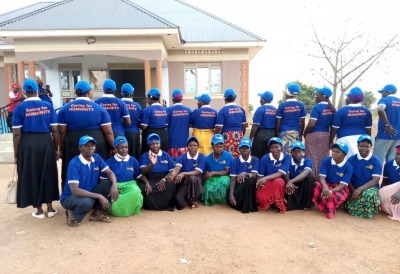
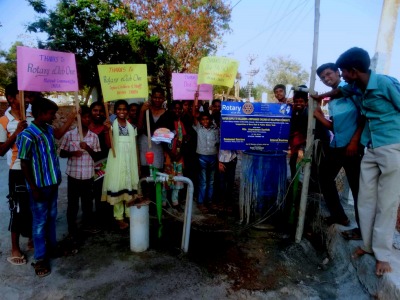
Article | 10/28/2025This book is dedicated to the resilient and visionary women and men of Africa’s villages who, when equipped with the tools of transformation—clean water, health, and finance—build dignified lives and powerful communities. It is a call to rethink development: not as something brought in from outside, but as a process ignited from within.
<p class="western" style="margin-bottom: 0.11in; line-height: 115%; orphans: 2; widows: 2"> <span style="font-family: Calibri, serif; font-size: 12pt;">Copyright &copy; 2025 by Chris Roesel</span></p> <p class="western" style="margin-bottom: 0.11in; line-height: 115%; orphans: 2; widows: 2"> <span style="font-family: Calibri, serif; font-size: 12pt;">All rights reserved.</span></p><p class="western" style="margin-bottom: 0.11in; line-height: 115%; orphans: 2; widows: 2"> <span style="font-family: Calibri, serif; font-size: 12pt;">No part of this publication may be reproduced, stored in a retrieval system, or transmitted in any form or by any means—electronic, mechanical, photocopying, recording, or otherwise—without the prior written permission of the author, except for brief quotations in critical articles or reviews.</span></p><p class="western" style="margin-bottom: 0.11in; line-height: 115%; orphans: 2; widows: 2"> <span style="font-family: Calibri, serif; font-size: 12pt;">This book is a work of nonfiction. All facts are based on sources deemed reliable, and real-life examples are used with permission or anonymized where appropriate.</span></p><p class="western" style="margin-bottom: 0.11in; line-height: 115%; orphans: 2; widows: 2"> <span style="font-family: Calibri, serif; font-size: 12pt;">First Edition</span></p> <p class="western" style="margin-bottom: 0.11in; line-height: 115%; orphans: 2; widows: 2"> <span style="font-family: Calibri, serif; font-size: 12pt;"><span style="font-size: 12pt;">ISBN: </span><span style="color: rgb(15, 17, 17); font-family: Arial, serif;"><span style="background: rgb(255, 255, 255); font-size: 10pt;">9798294521431</span></span></span></p> <p class="western" style="margin-bottom: 0.11in; line-height: 115%; orphans: 2; widows: 2"> <span style="font-family: Calibri, serif; font-size: 12pt;">Printed in the United States of America</span></p><p class="western" style="margin-bottom: 0.11in; line-height: 115%; orphans: 2; widows: 2"> <span style="font-family: Calibri, serif; font-size: 12pt;"><span style="font-size: 12pt;">For more information, visit: P2P Inc., </span><span style="text-decoration: underline; color: rgb(0, 0, 255);"><a href="https://people2peoplewaterforhumanity.com/"><span style="font-size: 12pt;">https://people2peoplewaterforhumanity.com/</span></a></span></span></p><p class="western" style="margin-bottom: 0.11in; line-height: 115%; orphans: 2; widows: 2"> <span style="font-family: Calibri, serif; font-size: 12pt;"><span lang="fr-ML" style="font-size: 12pt;">Contact: chris.roesel@gmail.com</span></span></p> <h1 class="western" align="center"><a name="_Toc204075490"></a><a name="_Toc204535157"></a><a name="_Toc205041909"></a><a name="_Toc205042211"></a> <span lang="fr-ML" style="font-size: 18pt;">Preface:</span></h1> <p class="western" style="margin-bottom: 0.08in; line-height: 115%; orphans: 2; widows: 2"> <span style="font-family: Times New Roman, serif; font-size: 12pt; color: rgb(0, 0, 0);">This book is dedicated to the resilient and visionary women and men of Africa’s villages who, when equipped with the tools of transformation—clean water, health, and finance—build dignified lives and powerful communities. It is a call to rethink development: not as something brought in from outside, but as a process ignited from within.</span></p> <p class="western" style="margin-bottom: 0.08in; line-height: 115%; orphans: 2; widows: 2"> <span style="font-family: Times New Roman, serif; font-size: 12pt; color: rgb(0, 0, 0);">Development, when imposed from afar, often withers before it can take root. It becomes dependency generation rather than increasing self-sufficiency. Yet, when villagers lead—and donors listen—change becomes not only possible, but sustainable and profound. This book, shaped by decades of public health practice, international partnership, and the lived wisdom of communities, explores how integrated efforts in Water, Sanitation, and Hygiene (WASH), Maternal and Child Health (MCH), and malaria initiatives can reshape both lives and landscapes. Drawing on international research and the stories of those at the forefront, it demonstrates that the journey from dependency to self-sufficiency is not just a policy shift, but a revolution of dignity.</span></p> <p class="western" style="margin-bottom: 0.11in; line-height: 115%; orphans: 2; widows: 2"><img src="https://www.rotaryeclubone.org/system/images/1.jpg,8" alt="" border="0px"></p><p style="margin-top: 0.19in; margin-bottom: 0.19in; orphans: 2; widows: 2"></p> <div id="Table of Contents1" dir="ltr"><div id="TextSection" dir="ltr"><h1 class="toc-heading" align="center"> Table of Contents</h1></div><p style="text-transform: uppercase; orphans: 2; widows: 2"><span style="font-family: Times New Roman, serif; font-size: 12pt;"><a href="https://www.rotaryeclubone.org/data/makeups/articles/from-dependency-to-self-sufficiency-paperback/1.pdf"><span style="font-variant: normal">Chapter 1: Introduction</span></a></span></p> <p style="text-transform: uppercase; orphans: 2; widows: 2"><span style="font-family: Times New Roman, serif; font-size: 12pt;"><a href="https://www.rotaryeclubone.org/data/makeups/articles/from-dependency-to-self-sufficiency-paperback/2.pdf"><span style="font-variant: normal">Chapter 2: The Burden Of Poverty And Disease</span></a></span></p> <p style="text-transform: uppercase; orphans: 2; widows: 2"><span style="font-family: Times New Roman, serif; font-size: 12pt;"><a href="https://www.rotaryeclubone.org/data/makeups/articles/from-dependency-to-self-sufficiency-paperback/3.pdf"><span style="font-variant: normal">Chapter 3: How Disease Is Transmitted — Diarrhea, Worms, And Malaria</span></a></span></p> <p style="text-transform: uppercase; orphans: 2; widows: 2"><span style="font-family: Times New Roman, serif; font-size: 12pt;"><a href="https://www.rotaryeclubone.org/data/makeups/articles/from-dependency-to-self-sufficiency-paperback/4.pdf"><span style="font-variant: normal">Chapter 4: Safe Water Access — Spring Captations, Gravity Flow, Wells, Rainwater, And Dams</span></a></span></p> <p style="text-transform: uppercase; orphans: 2; widows: 2"><span style="font-family: Times New Roman, serif; font-size: 12pt;"><a href="https://www.rotaryeclubone.org/data/makeups/articles/from-dependency-to-self-sufficiency-paperback/5.pdf"><span style="font-variant: normal">Chapter 5: Wash As The Foundation Of Health And Dignity</span></a></span></p> <p style="text-transform: uppercase; orphans: 2; widows: 2"><span style="font-family: Times New Roman, serif; font-size: 12pt;"><a href="https://www.rotaryeclubone.org/data/makeups/articles/from-dependency-to-self-sufficiency-paperback/6.pdf"><span style="font-variant: normal">Chapter 6: The Costs Of Dirty Water: Health, Time, Money, Nutrition, And Hope</span></a></span></p> <p style="text-transform: uppercase; orphans: 2; widows: 2"><span style="font-family: Times New Roman, serif; font-size: 12pt;"><a href="https://www.rotaryeclubone.org/data/makeups/articles/from-dependency-to-self-sufficiency-paperback/7.pdf"><span style="font-variant: normal">Chapter 7: Latrines And Leadership: Sanitation As A Symbol Of Empowerment</span></a></span></p> <p style="text-transform: uppercase; orphans: 2; widows: 2"><span style="font-family: Times New Roman, serif; font-size: 12pt;"><a href="https://www.rotaryeclubone.org/data/makeups/articles/from-dependency-to-self-sufficiency-paperback/8.pdf"><span style="font-variant: normal">Chapter 8. Soap And Handwashing: Simple, Scalable Models</span></a></span></p> <p style="text-transform: uppercase; orphans: 2; widows: 2"><span style="font-family: Times New Roman, serif; font-size: 12pt;"><a href="https://www.rotaryeclubone.org/data/makeups/articles/from-dependency-to-self-sufficiency-paperback/9.pdf"><span style="font-variant: normal">Chapter 9. Water Filters: Biosand, Ceramic, And Nanotubule Solutions</span></a></span></p> <p style="text-transform: uppercase; orphans: 2; widows: 2"><span style="font-family: Times New Roman, serif; font-size: 12pt;"><a href="https://www.rotaryeclubone.org/data/makeups/articles/from-dependency-to-self-sufficiency-paperback/10.pdf"><span style="font-variant: normal">Chapter 10: Malaria: The Silent Killer Of Ambition</span></a></span></p> <p style="text-transform: uppercase; orphans: 2; widows: 2"><span style="font-family: Times New Roman, serif; font-size: 12pt;"><a href="https://www.rotaryeclubone.org/data/makeups/articles/from-dependency-to-self-sufficiency-paperback/11.pdf"><span style="font-variant: normal">Chapter 11: Malaria — A Preventable Burden</span></a></span></p> <p style="text-transform: uppercase; orphans: 2; widows: 2"><span style="font-family: Times New Roman, serif; font-size: 12pt;"><a href="https://www.rotaryeclubone.org/data/makeups/articles/from-dependency-to-self-sufficiency-paperback/12.pdf"><span style="font-variant: normal">Chapter 12: Proven Paths To Malaria Elimination At The Village Level</span></a></span></p> <p style="text-transform: uppercase; orphans: 2; widows: 2"><span style="font-family: Times New Roman, serif; font-size: 12pt;"><a href="https://www.rotaryeclubone.org/data/makeups/articles/from-dependency-to-self-sufficiency-paperback/13.pdf"><span style="font-variant: normal">Chapter 13: How Wash And Malaria Elimination Interact</span></a></span></p> <p style="text-transform: uppercase; orphans: 2; widows: 2"><span style="font-family: Times New Roman, serif; font-size: 12pt;"><a href="https://www.rotaryeclubone.org/data/makeups/articles/from-dependency-to-self-sufficiency-paperback/14.pdf"><span style="font-variant: normal">Chapter 14: Microfinance — Empowering Women, Building Resilience</span></a></span></p> <p class="western" style="line-height: 115%; orphans: 2; widows: 2"><span style="font-family: Calibri, serif; font-size: 12pt;"><a href="https://www.rotaryeclubone.org/data/makeups/articles/from-dependency-to-self-sufficiency-paperback/15.pdf"><span style="font-family: Times New Roman, serif;">Chapter 15: Integration And Synergy — Why The Triple NexusWorks</span></a></span></p> <p style="text-transform: uppercase; orphans: 2; widows: 2"><span style="font-family: Times New Roman, serif; font-size: 12pt;"><a href="https://www.rotaryeclubone.org/data/makeups/articles/from-dependency-to-self-sufficiency-paperback/16.pdf"><span style="font-variant: normal">Chapter 16: Designing And Implementing A Triple Nexus Program</span></a></span></p> <p style="text-transform: uppercase; orphans: 2; widows: 2"><span style="font-family: Times New Roman, serif; font-size: 12pt;"><a href="https://www.rotaryeclubone.org/data/makeups/articles/from-dependency-to-self-sufficiency-paperback/17.pdf"><span style="font-variant: normal">Chapter 17: Stories Of Transformation — Voices From The Field</span></a></span></p> <p style="text-transform: uppercase; orphans: 2; widows: 2"><span style="font-family: Times New Roman, serif; font-size: 12pt;"><a href="https://www.rotaryeclubone.org/data/makeups/articles/from-dependency-to-self-sufficiency-paperback/18.pdf"><span style="font-variant: normal">Chapter 18: Measuring What Matters — Monitoring And Evaluation For Impact</span></a></span></p> <p style="text-transform: uppercase; orphans: 2; widows: 2"><span style="font-family: Times New Roman, serif; font-size: 12pt;"><a href="https://www.rotaryeclubone.org/data/makeups/articles/from-dependency-to-self-sufficiency-paperback/19.pdf"><span style="font-variant: normal">Chapter 19: Mobilizing Resources And Partnerships</span></a></span></p> <p style="text-transform: uppercase; orphans: 2; widows: 2"><span style="font-family: Times New Roman, serif; font-size: 12pt;"><a href="https://www.rotaryeclubone.org/data/makeups/articles/from-dependency-to-self-sufficiency-paperback/20.pdf"><span style="font-variant: normal">Chapter 20: Scaling Impact — From Pilot To National Transformation</span></a></span></p> <p style="text-transform: uppercase; orphans: 2; widows: 2"><span style="font-family: Times New Roman, serif; font-size: 12pt;"><a href="https://www.rotaryeclubone.org/data/makeups/articles/from-dependency-to-self-sufficiency-paperback/21.pdf"><span style="font-variant: normal">Chapter 21: Conclusion — A New Development Paradigm</span></a></span></p> <p style="text-transform: uppercase; orphans: 2; widows: 2"><span style="font-family: Times New Roman, serif; font-size: 12pt;"><a href="https://www.rotaryeclubone.org/data/makeups/articles/from-dependency-to-self-sufficiency-paperback/bib.pdf"><span style="font-variant: normal">Bibliography</span></a></span></p><p style="text-transform: uppercase; orphans: 2; widows: 2"><span style="font-family: Times New Roman, serif; font-size: 12pt;"><a href="https://www.rotaryeclubone.org/data/makeups/articles/from-dependency-to-self-sufficiency-paperback/vsla.pdf"><span style="font-variant: normal">Example Vsla Endowment Model</span></a></span></p> <p style="text-transform: uppercase; orphans: 2; widows: 2"><span style="font-family: Times New Roman, serif; font-size: 12pt;"><a href="https://www.rotaryeclubone.org/data/makeups/articles/from-dependency-to-self-sufficiency-paperback/survey.pdf"><span style="font-variant: normal">Community Assessment Survey For Wash And Malaria</span></a></span></p> <p style="text-transform: uppercase; orphans: 2; widows: 2"><span style="font-family: Times New Roman, serif; font-size: 12pt;"><a href="https://www.rotaryeclubone.org/data/makeups/articles/from-dependency-to-self-sufficiency-paperback/prepost.pdf"><span style="font-variant: normal">Pre-Post Evaluation Sample Survey</span></a></span><br> <br> </p> </div> <p class="western" style="margin-bottom: 0.11in; line-height: 115%; orphans: 2; widows: 2"> <br> <br> </p> <p class="western" style="margin-bottom: 0.11in; line-height: 115%; orphans: 2; widows: 2; page-break-before: always"><a name="_Toc204939797"></a><a name="_Toc205041911"></a><a name="_Toc205042212"></a> <span style="font-family: Calibri, serif; font-size: 12pt;"><span style="color: rgb(47, 84, 150); font-family: Calibri Light, serif; font-size: 18pt;">Table of Abbreviations:<br> </span><span style="font-size: 12pt;"><br> WASH – Water, Sanitation, and Hygiene<br> VSLA – Village Savings and Loan Association<br> LLIN – Long-Lasting Insecticidal Net<br> IRS – Indoor Residual Spraying<br> RDT – Rapid Diagnostic Test<br> ACT – Artemisinin-based Combination Therapy<br> VIP – Ventilated Improved Pit (latrine)<br> ITN – Insecticide-Treated Net<br> NGO – Non-Governmental Organization<br> UNHCR – United Nations High Commissioner for Refugees<br> MCH – Maternal and Child Health<br> WHO – World Health Organization<br> </span></span><br> <br> </p> <p class="western" style="margin-bottom: 0.11in; line-height: 115%; orphans: 2; widows: 2"> <span style="font-family: Calibri, serif; font-size: 12pt; color: rgb(0, 0, 0);">.About the Author: Chris Roesel is the President of P2P Inc., a Rotary International WASH Cadre and Ambassador, and a lifelong public health, nutrition, and whole systems change practitioner who believes that the most transformative development happens when villagers lead—and donors listen.</span></p> <style type="text/css">h1.toc-heading { margin-top: 0.17in; margin-bottom: 0in; font-size: 16pt; line-height: 108% }h1 { margin-top: 0.25in; margin-bottom: 0.06in; direction: ltr; color: #2f5496; line-height: 115%; text-align: left; page-break-inside: avoid; orphans: 2; widows: 2; background: transparent; page-break-after: avoid }h1.western { font-family: "Calibri Light", serif; font-size: 20pt }h1.cjk { font-family: ; font-size: 20pt }h1.ctl { font-family: ; font-size: 20pt }p { margin-bottom: 0in; direction: ltr; line-height: 100%; text-align: left; orphans: 0; widows: 0; background: transparent }p.western { font-family: "Arial", serif; font-size: 13pt }p.cjk { font-family: "Arial"; font-size: 13pt }p.ctl { font-family: "Arial"; font-size: 13pt }a:link { color: #0000ff; text-decoration: underline }</style>
Notable (and Quotable) Rotarians | Neil Armstrong
General
Article | 10/7/2025Notable (and Quotable) Rotarians | Neil Armstrong
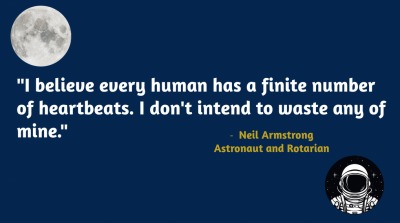
<p class="MsoNormal" style="margin-left:20.25pt"><span style="mso-bidi-font-weight: bold">Rotarians worldwide are committed to doing good in our world. Each member's contributions are important, and in many instances, those contributions are life-changing for everyone involved. In addition to Rotary service, some Rotarians achieve significant professional accolades in their respective fields and become well-known both in and out of their fields.<o:p></o:p></span></p> <p class="MsoNormal" style="margin-left:20.25pt"><span style="mso-bidi-font-weight: bold">Below is a quote from someone you may know who is also a Rotarian or Honorary Rotarian. Reflect on the quotes below, consider how these quotes align with Rotary’s </span><a href="https://my.rotary.org/en/who-we-are/about-rotary/guiding-principles"><span style="mso-bidi-font-weight:bold">Four-Way Test</span></a><span style="mso-bidi-font-weight:bold"> and seven </span><a href="https://www.rotary.org/en/our-causes"><span style="mso-bidi-font-weight: bold">Areas of Focus</span></a><span style="mso-bidi-font-weight:bold">, and learn more about the Rotarian’s life and work.</span></p><div><br></div><img src="https://www.rotaryeclubone.org/system/images/Neil-Armstrong-Quote.png,8" alt="" border="0px"><div><br></div><div><p class="MsoNormal" style="margin-left:.25in"><span style="mso-bidi-font-weight: bold">Learn more about Neil Armstrong via the following websites:<o:p></o:p></span></p> <p class="MsoNormal" style="margin-left:.25in"><a href="https://www.neilarmstrong.com/"><span style="mso-bidi-font-weight:bold">https://www.neilarmstrong.com/</span></a><span style="mso-bidi-font-weight:bold"> Neil Armstrong Website<o:p></o:p></span></p> <p class="MsoNormal" style="margin-left:.25in"><a href="https://www.nasa.gov/humans-in-space/astronauts/former-astronauts/former-astronaut-neil-a-armstrong/"><span style="mso-bidi-font-weight:bold">https://www.nasa.gov/humans-in-space/astronauts/former-astronauts/former-astronaut-neil-a-armstrong/</span></a><span style="mso-bidi-font-weight:bold"> National Aeronautics and Space Administration (NASA)<o:p></o:p></span></p><br></div>
Notable (and Quotable) Rotarians | Charles H. Mayo
Rotary Life
Article | 9/24/2025Notable (and Quotable) Rotarians | Charles H. Mayo
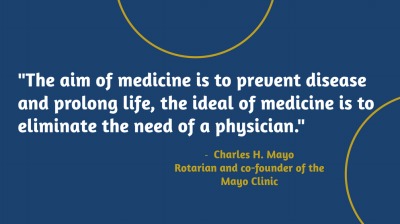
<p class="MsoNormal" style="margin-left:20.25pt"><span style="font-size: 11.9pt;">Rotarians worldwide are committed to doing good in our world. Each member's contributions are important, and in many instances, those contributions are life-changing for everyone involved. In addition to Rotary service, some Rotarians achieve significant professional accolades in their respective fields and become well-known both in and out of their fields.</span></p> <p class="MsoNormal" style="margin-left:20.25pt">Below is a quote from someone you may know who is also a Rotarian or Honorary Rotarian. Reflect on the quote below, consider how these quotes align with Rotary’s <a href="https://my.rotary.org/en/who-we-are/about-rotary/guiding-principles">Four-Way Test</a> and seven <a href="https://www.rotary.org/en/our-causes">Areas of Focus</a>, and learn more about the Rotarian's life and work.</p><p class="MsoNormal" style="margin-left:20.25pt"><br></p><p class="MsoNormal" style="margin-left:20.25pt"><br></p><p class="MsoNormal" style="margin-left:20.25pt"><img src="https://www.rotaryeclubone.org/system/images/Charles-H.-Mayo-Quote.png,8" alt="" border="0px"></p><p class="MsoNormal"><br></p><p class="MsoNormal"><br></p><p class="MsoNormal">Learn more about Charles H. Mayo via the following websites:<o:p></o:p></p><p class="MsoNormal">Mayowood |&nbsp;<a href="https://history.mayoclinic.org/tours-events/mayowood/">https://history.mayoclinic.org/tours-events/mayowood/</a><br></p><p class="MsoNormal">Mayo Clinic College of Medicine and Science |&nbsp;<a href="https://college.mayo.edu/about/college-profile/history/">https://college.mayo.edu/about/college-profile/history/</a><br></p><p class="MsoNormal">Mayo Clinic Historical Suite |&nbsp;<a href="https://history.mayoclinic.org/tours-events/w-bruce-fye-center-for-the-history-of-medicine/">https://history.mayoclinic.org/tours-events/w-bruce-fye-center-for-the-history-of-medicine/</a></p>
The Secret to Getting Ahead | Mark Twain
General
Article | 9/3/2025The Secret to Getting Ahead | Mark Twain
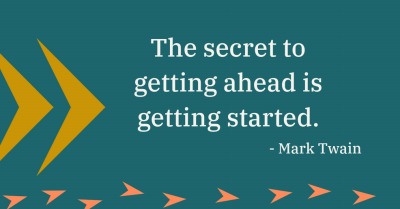
<p class="MsoListParagraphCxSpFirst" style="margin-left:20.25pt;mso-add-space: auto;text-indent:-.25in;mso-list:l0 level1 lfo1"><!--[if !supportLists]--><img src="https://www.rotaryeclubone.org/system/images/Mark-Twain-Quote.png,8" style="font-size: 11.9pt;" alt="" border="0px"></p><p class="MsoListParagraphCxSpFirst" style="margin-left:20.25pt;mso-add-space: auto;text-indent:-.25in;mso-list:l0 level1 lfo1">-<span style="font-variant-numeric: normal; font-variant-east-asian: normal; font-variant-alternates: normal; font-size-adjust: none; font-kerning: auto; font-optical-sizing: auto; font-feature-settings: normal; font-variation-settings: normal; font-variant-position: normal; font-variant-emoji: normal; font-stretch: normal; font-size: 7pt; line-height: normal; font-family: &quot;Times New Roman&quot;;">&nbsp; &nbsp; &nbsp; &nbsp; </span>The quote above, attributed to American author Mark Twain, seems to support action over inaction. To what extent do you or your Rotary Club lean toward action?<span style="font-weight: bold;"><o:p></o:p></span></p><p class="MsoListParagraphCxSpMiddle" style="margin-left:20.25pt;mso-add-space: auto;text-indent:-.25in;mso-list:l0 level1 lfo1"><!--[if !supportLists]-->-<span style="font-variant-numeric: normal; font-variant-east-asian: normal; font-variant-alternates: normal; font-size-adjust: none; font-kerning: auto; font-optical-sizing: auto; font-feature-settings: normal; font-variation-settings: normal; font-variant-position: normal; font-variant-emoji: normal; font-stretch: normal; font-size: 7pt; line-height: normal; font-family: &quot;Times New Roman&quot;;">&nbsp; &nbsp; &nbsp; &nbsp; &nbsp;</span><!--[endif]-->Are there times in which inaction may be a more prudent course? If so, what is an effective way to determine whether to favor action or inaction in a particular situation?<o:p></o:p></p><p class="MsoListParagraphCxSpMiddle" style="margin-left:20.25pt;mso-add-space: auto;text-indent:-.25in;mso-list:l0 level1 lfo1"><!--[if !supportLists]-->-<span style="font-variant-numeric: normal; font-variant-east-asian: normal; font-variant-alternates: normal; font-size-adjust: none; font-kerning: auto; font-optical-sizing: auto; font-feature-settings: normal; font-variation-settings: normal; font-variant-position: normal; font-variant-emoji: normal; font-stretch: normal; font-size: 7pt; line-height: normal; font-family: &quot;Times New Roman&quot;;">&nbsp; &nbsp; &nbsp; &nbsp; &nbsp;</span><!--[endif]-->To learn more about Mark Twain, consider visiting the following websites.&nbsp; To what extent do you think Twain lived out this quote?<o:p></o:p></p><p class="MsoListParagraphCxSpMiddle" style="margin-left:56.25pt;mso-add-space: auto;text-indent:-.25in;mso-list:l0 level2 lfo1"><!--[if !supportLists]--><span style="font-family:&quot;Courier New&quot;;mso-fareast-font-family:&quot;Courier New&quot;">o<span style="font-variant-numeric: normal; font-variant-east-asian: normal; font-variant-alternates: normal; font-size-adjust: none; font-kerning: auto; font-optical-sizing: auto; font-feature-settings: normal; font-variation-settings: normal; font-variant-position: normal; font-variant-emoji: normal; font-stretch: normal; font-size: 7pt; line-height: normal; font-family: &quot;Times New Roman&quot;;">&nbsp;&nbsp; </span></span><!--[endif]-->The Mark Twain Boyhood Home &amp; Museum | <a href="https://marktwainmuseum.org/">https://marktwainmuseum.org/</a><o:p></o:p></p><p class="MsoNormal" style="margin-left:20.25pt;text-indent:-.25in"> </p><p class="MsoListParagraphCxSpLast" style="margin-left:56.25pt;mso-add-space: auto;text-indent:-.25in;mso-list:l0 level2 lfo1"><!--[if !supportLists]--><span style="font-family:&quot;Courier New&quot;;mso-fareast-font-family:&quot;Courier New&quot;">o<span style="font-variant-numeric: normal; font-variant-east-asian: normal; font-variant-alternates: normal; font-size-adjust: none; font-kerning: auto; font-optical-sizing: auto; font-feature-settings: normal; font-variation-settings: normal; font-variant-position: normal; font-variant-emoji: normal; font-stretch: normal; font-size: 7pt; line-height: normal; font-family: &quot;Times New Roman&quot;;">&nbsp;&nbsp; </span></span><!--[endif]-->The Mark Twain House &amp; Museum | <a href="https://marktwainhouse.org/">https://marktwainhouse.org/</a> <o:p></o:p></p>
Welcome In: How To Enhance Club Culture | Rotary Voices Podcast
Rotary Life
Video | 8/22/2025
While watching the video below, consider the following reflection questions:<div><br></div><div><p class="MsoListParagraphCxSpFirst" style="margin-left:20.25pt;mso-add-space: auto;text-indent:-.25in;mso-list:l0 level1 lfo1"><!--[if !supportLists]-->-<span style="font-variant-numeric: normal; font-variant-east-asian: normal; font-variant-alternates: normal; font-size-adjust: none; font-kerning: auto; font-optical-sizing: auto; font-feature-settings: normal; font-variation-settings: normal; font-variant-position: normal; font-variant-emoji: normal; font-stretch: normal; font-size: 7pt; line-height: normal; font-family: &quot;Times New Roman&quot;;">&nbsp;&nbsp;&nbsp;&nbsp;&nbsp;&nbsp;&nbsp;&nbsp;&nbsp; </span><!--[endif]-->Brianna mentions that Rotary is a space for genuine personal connection. Think back to when you first joined Rotary. Who do you remember as your first genuine personal connection in your club?<o:p></o:p></p> <p class="MsoListParagraphCxSpMiddle" style="margin-left:20.25pt;mso-add-space: auto;text-indent:-.25in;mso-list:l0 level1 lfo1"><!--[if !supportLists]-->-<span style="font-variant-numeric: normal; font-variant-east-asian: normal; font-variant-alternates: normal; font-size-adjust: none; font-kerning: auto; font-optical-sizing: auto; font-feature-settings: normal; font-variation-settings: normal; font-variant-position: normal; font-variant-emoji: normal; font-stretch: normal; font-size: 7pt; line-height: normal; font-family: &quot;Times New Roman&quot;;">&nbsp;&nbsp;&nbsp;&nbsp;&nbsp;&nbsp;&nbsp;&nbsp;&nbsp; </span><!--[endif]-->What ways do you choose to engage with Rotary? (There are no wrong answers, so long as you are engaged!) Are you active with your local club? At the district level? Or, would you consider participation in <a href="https://my.rotary.org/en/participate/programs/join-a-rotary-action-group">Rotary Action Groups</a>, which have special areas of focus?<o:p></o:p></p> <p class="MsoListParagraphCxSpLast" style="margin-left:20.25pt;mso-add-space: auto;text-indent:-.25in;mso-list:l0 level1 lfo1"><span style="font-size: 11.9pt;">Did you know that there are over 35,000 Rotary Clubs worldwide? Would you consider visiting a neighboring club to learn</span>&nbsp;how they run their meetings?<o:p></o:p></p></div>
Change Is a Lonely Hunter: The New Paradigms of Leadership
Personal Growth
Article | 6/7/2024
<p class="Default" style="text-align: center;"><img src="https://www.rotaryeclubone.org/system/images/Leadership-Article-24.jpg,8" alt="" border="0px"></p><p class="Default" style="text-align: justify;"><span style="font-size:11.5pt"><br></span></p><p class="Default" style="text-align: justify;"><span style="font-size:11.5pt">I have a friend who frequently says that self-awareness is the most important trait of a leader. I’ve always had difficulty crediting that observation with significance since it’s not something you can prove empirically or even explain. What does it mean anyway? I mean, when is the last time someone said to you at a party, “You know, I just don’t have any self-awareness. Wish I did. Love the guacamole, by the way.”</span></p> <p class="Default" style="text-align: justify;"><span style="font-size:11.5pt">But I recently found a way of thinking about self-awareness in an unexpected place, in the classic seminal work of Stephen Covey, <span style="font-style: italic;">The Seven Habits of Highly Effective People</span>, a book that has been hiding in plain site on my bookshelf. Covey says that what makes us human, as opposed to one of Pavlov’s dogs, is what happens between our environmental stimuli and responses. Suddenly, I found myself with a way of thinking about self-awareness that made sense to me. It’s the space, stupid! <span style="font-style: italic;">That space—</span>between stimulus and response—can take many, many forms. But what emerges in that space is self-awareness. You can have ten people responding the same way to a stimulus. But that doesn’t mean that the space between stimulus and response is the same. Because we’re complex thinking beings, that space and what we bring to it is unique to each individual. This space is a complicated lonely isthmus of thinking, affected by all the genes and experiences that make us who we are in that moment. I don’t want to over-think this but take reading. What happens in that space can certainly be affected by what we’ve read (I’m mainly talking about books and articles)—not to mention the tangential cognitive and critical thinking skills that accrue to us as byproducts. “As you become involved in continuing education,” Covey says, “you increase your knowledge base, and you increase your options.”&nbsp;<o:p></o:p></span></p><p class="Default" style="text-align: justify; break-before: page;"><span style="font-size:11.5pt">This is the background program that is running as part of the chemical reaction of neurons in the tomato soup that is you when you are acted upon by a stimulus. Think Tennyson’s poem, “Ulysses”: “I am a part of all that I have met.” <o:p></o:p></span></p><p class="Default" style="text-align: justify;"><span style="font-size:11.5pt">This is my first point. <o:p></o:p></span></p><p class="Default" style="text-align: justify;"><span style="font-size: 11.5pt;">My second point is that I’ve come to believe that the way we traditionally think about leadership is wrong for the environment in which we live today and tomorrow. I was already questioning some of my own long-held beliefs when I read </span><span style="font-size: 11.5pt; font-style: italic;">The Power of Pull </span><span style="font-size: 11.5pt;">by John Hagel, Seely Brown, and Lang Davison. As I discuss later, “pull” in this context has nothing to do with political influence. It has to do with “pulling” resources from the information flow, that amorphous vast limitless reservoir of information that separates the present and future from the past. </span><span style="font-size: 11.5pt; font-style: italic;">All </span><span style="font-size: 11.5pt;">of us have access to the flow. No monopolies exist here. “In times of unprecedented change,” wrote </span><span style="font-size: 11.5pt; font-style: italic;">Megatrends </span><span style="font-size: 11.5pt;">author John Naisbitt, “we as individuals and institutions can have extraordinary leverage and influence if we marshal the passion, knowledge, and resources necessary to achieve great things. </span><span style="font-size: 11.5pt; font-style: italic;">The Power of Pull </span><span style="font-size: 11.5pt;">empowers and guides us to make the most of today’s enormous possibilities.”</span></p><p class="Default" style="text-align: justify;"><span style="font-size:11.5pt">The FLOW is what matters, not the bureaucratic hierarchic transmittal of information from one person to another, but the mighty Mississippi of information that flows inexorably past us every minute of every day. You can choose to become immersed in THE FLOW or be forever left behind.</span></p><p class="Default" style="text-align: justify;"><span style="font-weight: bold;"><span style="font-size: 11.5pt; font-style: italic;">Old Leadership Paradigm No. 1</span></span></p><p class="Default" style="text-align: justify;"><span style="font-weight: bold;"><span style="font-size: 11.5pt; color: blue; font-style: italic;">Leadership is vertical in its orientation.</span></span></p><p class="Default" style="text-align: justify;"><span style="font-size:11.5pt">All our lives we see leadership in terms of a vertical hierarchy. This is largely because this is the way we’ve experienced it personally in every arena, from the basic centrality of family to the expanding, concentric circles beyond, to school, to institutions and business and industry, indeed, to the world writ large. There is always a boss. (And the boss is always right. Granted, the first person to say this probably worked in the medieval equivalent of a cubicle. But let’s move on.) All of us are aligned some place in a leadership constellation in relation to the leader. (I’m thinking primarily about the workplace, but this modality applies to pretty much everything.) <o:p></o:p></span></p><p class="Default" style="text-align: justify;"><span style="font-size:11.5pt">Goals are largely developed and communicated from the top down. If you want confirmation, look at what happens in that pillar of business enterprise, the annual performance review. Goals are largely handed down to you from Mount Parnassus. Even if you are asked to formulate your own goals, you are provided with the leader’s context and constraints. I like what Linenberger said about this: “Work-assigned goals these days are usually harsh measures you are dinged with at review time, rather than aspirations that inspire you to reach for more accomplishments.” <o:p></o:p></span></p><p class="Default"> </p><p class="Default" style="text-align: justify;"><span style="font-size:11.5pt">Another central problem with reliance on vertical leadership is that even the best leaders are imperfect mixes of positives and negatives, highs and lows (as are all of us). I understand even Genghis Kahn gave all his top generals Jerry Garcia ties and coffee mugs for Christmas without fail. Let’s face it. You get good and bad everywhere. That’s life. Sometimes you eat the bear and sometimes the bear eats you.&nbsp;<o:p></o:p></span></p><p class="Default" style="text-align: justify; break-before: page;"><span style="font-weight: bold;"><span style="font-size: 11.5pt; font-style: italic;">New Leadership Paradigm No. 1</span></span></p><p class="Default" style="text-align: justify;"><span style="font-weight: bold;"><span style="font-size: 11.5pt; color: blue; font-style: italic;">Leadership is horizontal in its orientation.</span></span></p><p class="Default" style="text-align: justify;"><span style="font-size:11.5pt">It doesn’t matter as much anymore who a leader even is. Today, anyone can be a leader because anyone can have an idea that suddenly moves an organization in positive and transformative directions. Ideas are not always respectful of existing organization charts. And the thought leader on Monday may yield to another by Friday as powerful ideas are constantly shaped and adapted. This is all part of the power of organizational pull. <o:p></o:p></span></p><p class="Default" style="text-align: justify;"><span style="font-size:11.5pt">Demonstrating “pull” is the new sign of an effective leader. As I mentioned, “pull” in the sense I mean here is a relatively new term that means “the ability to draw out people and resources as needed to address opportunities and challenges” (Hagel et al, 2010): <o:p></o:p></span></p><p class="Default" style="text-align: justify;"><span style="font-size:11.5pt">Pull gives us unprecedented access to what we need, when we need it, even if we’re not quite sure what that ‘it’ is. Pull allows us to harness and unleash the forces of attraction, influence, and serendipity. Using pull, we can create the conditions by which individuals, teams, and even institutions can achieve their potential in less time and with more impact than has ever been possible. The power of pull provides a key to how all of us—individually and collectively—can turn challenge and stress into opportunity and reward as digital technology remakes our lives. <o:p></o:p></span></p><p class="Default" style="text-align: justify;"><span style="font-size:11.5pt">The ability to access pull at all levels of an organization is why I’m saying that today, leadership is horizontal in its orientation. Immersion in the world of flow is driven not by hierarchy, but by the passion and interests of individuals who may well be beyond the pale of executive reach. The most valuable “employee” in an organization, when it comes to driving innovation and transformational change, may be on the fringes of an institution or might not even be an employee at all. The disappearance of the Mycenean civilization, for example, may mean nothing to you until something about it moves ONE individual somewhere to draw some inference that in a burst of creativity sparks a new way of looking at supply chains or product lines or call centers.</span></p><p class="Default" style="text-align: justify;"><span style="font-weight: bold;"><span style="font-size: 11.5pt; font-style: italic;">Old Leadership Paradigm No. 2:</span></span></p><p class="Default" style="text-align: justify;"><span style="font-weight: bold;"><span style="font-size: 11.5pt; color: blue; font-style: italic;">The locus of leadership is in the organizational core.</span></span></p><p class="Default" style="text-align: justify;"><span style="font-size:11.5pt">As Hegel put it, “In previous generations of institutional change, an elite at the top of the organization created the world into which everybody else needed to fit…. Rather than individuals serving the needs of institutions, our institutions will be recrafted to serve the needs of individuals.” The effect of this shift in thinking moves transformation from the organizational core to the organizational edges. <o:p></o:p></span></p><p class="Default" style="text-align: justify;"><span style="font-size:11.5pt">Incumbents at the core—which is the place where most of the resources, especially people and money, are concentrated, and where old ways of thinking and acting still hold sway—have many fewer incentives to figure out the world, or to discover new ways of doing things, or to find new information. <o:p></o:p></span></p><p class="Default" style="text-align: justify; break-before: page;"><span style="font-size:11.5pt">It’s far too easy for a business to focus its organizational managerial heart on the organizational core, particularly when a business is large. According to the NAICS Association, 1,220,329 American businesses have between 1,000 and 10,000 employees; 600,947 have more than 20,000. Walmart and Amazon, the two largest, have 2.3M and 1.7M respectively. If you have tens of thousands of employees, it’s easy for core leaders to marginalize them, to see them as oceanic krill there to support the edicts of management and little else. This is a huge and costly mistake since a leader on fire with a transformational idea can arise from anywhere.</span></p><p class="Default" style="text-align: justify;"><span style="font-weight: bold;"><span style="font-size: 11.5pt; font-style: italic;">New Leadership Paradigm No. 2</span></span></p><p class="Default" style="text-align: justify;"><span style="font-weight: bold;"><span style="font-size: 11.5pt; color: blue; font-style: italic;">The locus of leadership is in the organizational edges.</span></span></p><p class="Default" style="text-align: justify;"><span style="font-size:11.5pt">This is a bold assertion and one that runs counter to the way we usually think about leadership. But the reason that, increasingly, change is driven from the edges is that the free association of ideas that drives transformation can come from anywhere, often from unexpected, unforeseen places. This is true because interest itself can come from anywhere. With so much information around us, anything can create passion for doing things differently and better. <o:p></o:p></span></p><p class="Default" style="text-align: justify;"><span style="font-size:11.5pt">Okay, passion may be a lot to look for. But passion begins with interest, and every individual has interests. The new locus of leadership is in recognizing that “changes will be driven by passionate individuals distributed throughout and even outside the institution, supported by institutional leaders who understand the need for change but who also realize that this wave of change cannot be imposed from the top down” (Hegel): <o:p></o:p></span></p><p class="Default" style="text-align: justify;"><span style="font-size:11.5pt">It’s no accident that most of these early examples of creation spaces are initially attracting individuals rather than institutions. Passionate individuals…naturally seek out these creation spaces to get better faster, while most institutions are still deeply concerned about protection of knowledge stocks and do not yet see the growing importance of knowledge flows in driving performance improvement.” <o:p></o:p></span></p><p class="Default" style="text-align: justify;"><span style="font-size:11.5pt">Important ideas can pop up from anywhere. At the Battle of Agincourt in 1415, the vastly outnumbered English won a decisive victory because of the emergent strategic use of the long bow, an idea that changed the course of war between these countries for a century or more. (Henry also ordered the slaughter of several thousand French prisoners after the battle because of his IDEA that such a large conclave of prisoners constituted a battlefield threat.) <o:p></o:p></span></p><p class="Default" style="text-align: justify;"><span style="font-size:11.5pt">A pioneer of the spy-novel, Ian Fleming, created a literary and cultural icon, of course, when he developed the character, James Bond. But the idea for the name James Bond emerged from Fleming’s interest in, of all things, botany! James Bond was the name of an obscure botanist few had heard of. <o:p></o:p></span></p><p class="Default" style="text-align: justify;"><span style="font-size:11.5pt">Many know of Edweard Muybridge’s foundational leadership role in the development of motion pictures. But cultural history might have taken another tack without the considerable financial support of a patron, Leland Stanford, the Gilded Age, railroad tycoon, who was passionate about—not motion pictures per se. He was passionate about…horses! He was entranced by Muybridge’s ideas about capturing the movement of horses. Indeed, Muybridge’s early presentations were of the movement of Stanford’s own horses. Muybridge was smart enough to <o:p></o:p></span></p><p class="Default" style="text-align: justify; break-before: page;"><span style="font-size:11.5pt">capitalize on this interest. (He was also smart enough to literally get away with murder—see any biography or the movie “Edweard” for the lurid details.) <o:p></o:p></span></p><p class="Default" style="text-align: justify;"><span style="font-size:11.5pt">I could site millions of examples of the unpredictable nature of leadership and ideas appearing from unexpected people in unexpected places. So—an important recommendation: Don’t bet your corporate future on your Vice President over innovation and the annual employee picnic.</span></p><p class="Default" style="text-align: justify;"><span style="font-weight: bold;"><span style="font-size: 11.5pt; font-style: italic;">Old Leadership Paradigm No. 3:</span></span></p><p class="Default" style="text-align: justify;"><span style="font-weight: bold;"><span style="font-size: 11.5pt; color: blue; font-style: italic;">The mission of the organization is scalable efficiency.</span></span></p><p class="Default" style="text-align: justify;"><span style="font-size:11.5pt">When I worked as a college dean, this was something I passionately believed in. I read Michael Gerber’s <span style="font-style: italic;">The E-Myth Revisited </span>thirty years ago, and its prescripts about working “ON the business, not IN it” still resonate with me. The thesis of the book, for anyone not familiar with it, is that most new businesses fail, and fail early and often at alarming rates. The exception is the franchise. The product of the franchise is the business itself. Ray Kroc, Gerber asserts, was never in the back of a McDonald’s making milkshakes or French fries. He was working on a business model or prototype that took every business nuance into consideration in the creation of a dynamic model that could be replicated over and over and over again, whether the business was located in downtown Cleveland or rural Oklahoma or Kosovo. <o:p></o:p></span></p><p class="Default" style="text-align: justify;"><span style="font-size:11.5pt">There is still and will always be a place for scalable efficiency in business. I’m not saying that this is not an important and necessary goal. What I AM saying is that it matters a lot less now and in the future. Back to Walmart’s 2.3M employees. Yes, it’s important that Walmart has mastered supply chains, inventory control, almost instantaneous pricing infrastructure, and stocking a five-year supply of those blue jackets. I’m just one person asking a question: What happens to all this engrained economic “efficiency” tomorrow when someone somewhere in the hinterlands comes up with a new transformative way to use AI that makes much of today’s technologies obsolete and you suddenly need different technologies and perhaps a different workforce? Yesterday’s efficiencies are tomorrow’s severance packages.</span></p><p class="Default" style="text-align: justify;"><span style="font-weight: bold;"><span style="font-size: 11.5pt; font-style: italic;">New Leadership Paradigm No. 3:</span></span></p><p class="Default" style="text-align: justify;"><span style="font-weight: bold;"><span style="font-size: 11.5pt; color: blue; font-style: italic;">The mission of the organization is scalable learning.</span></span></p><p class="Default" style="text-align: justify;"><span style="font-size:11.5pt">This is truly where leadership should reside now. Efficiency is all well and good, but an organization that thinks the locus of leadership is in developing scalable efficiency alone will die. “Our success in finding new information and sources of inspiration,” Hegel points out, “increasingly depends upon serendipity—the chance encounter with someone or something that we did not even know existed, much less had value, but that proves to be extraordinarily relevant and helpful once we find out about it.” <o:p></o:p></span></p><p class="Default" style="text-align: justify;"><span style="font-size:11.5pt">Serendipity is the quintessence of the new leadership paradigm. The leaders that matter—and no one can anticipate who they’ll be—are out there right now, thinking and learning, reaching into this flow that I’ve been alluding to and pulling out who knows what and creating something new. <o:p></o:p></span></p><p class="Default"> </p><p class="Default" style="text-align: justify; break-before: page;"><span style="font-size:11.5pt">The way to scale learning is to make it the centerpiece of your organization. Change is so powerful, pervasive, and all-consuming in the modern organizational milieu that it has to be welcomed, valued, and engrained in your culture.&nbsp;<o:p></o:p></span></p><p class="Default" style="text-align: justify;"><span style="font-weight: bold;"><span style="font-size: 11.5pt; font-style: italic;">Old Leadership Paradigm No. 4:</span></span></p><p class="Default" style="text-align: justify;"><span style="font-weight: bold;"><span style="font-size: 11.5pt; color: blue; font-style: italic;">Be nice.</span></span></p><p class="Default" style="text-align: justify;"><span style="font-size:11.5pt">I began this article with homage to Covey, so let’s return there. One of his seven habits is to “seek first to understand; then to be understood.” This is the essence of being nice. Listening and being present. Covey presents a dichotomy that I find useful in dealing with others: diagnosis versus prescription. In organizations, as in personal relationships, we frequently get these two distinct but synergistic concepts backwards. We want to prescribe before we diagnose. We know intuitively that this is backwards, but we can’t help ourselves. We have precious commodities, wisdom and insight, that we are eager to share with subordinates as an act of kindness, of largesse, of organizational <span style="font-style: italic;">noblese oblige </span>even. Being nice is often about keeping our own mouths shut as we seek first to understand without feeling compelled to enlighten, a difficult task for those of us whose tongues are turning purple while this is taking place. <o:p></o:p></span></p><p class="Default" style="text-align: justify;"><span style="font-size:11.5pt">If you don’t think you’re perceived as nice, don’t despair. Just try. Covey contributes here, too: “On a ten-point scale, if I am at level two in any field, and desire to move to level five, I must first take the step toward level three.” Marc and Angel, two popular online personal achievement columnists, say it this way: “Making one person smile can change the world. Maybe not the whole world, but their world. So start small and start now. Be patient. Be present. Be kind. Compliment people. Magnify their strengths, not their weaknesses. This is how to make a difference, in your life above all, and in all the lives you touch.”</span></p><p class="Default" style="text-align: justify;"><span style="font-weight: bold;"><span style="font-size: 11.5pt; font-style: italic;">New Leadership Paradigm No. 4:</span></span></p><p class="Default" style="text-align: justify;"><span style="font-weight: bold;"><span style="font-size: 11.5pt; color: blue; font-style: italic;">Be nicer.</span></span></p><p class="Default" style="text-align: justify;"><span style="font-size:11.5pt">For an organization, for the <span style="font-style: italic;">New Leadership Paradigms </span>to prosper and have efficacy, they need a place to grow. So now we’re talking about culture. Throughout my career, I have often quoted Peter Drucker: “Culture eats strategy for lunch every day.” There are many influences on culture, and culture can change on a dime due to a myriad of internal—or external—factors. But in the context of being nicer, I’m primarily talking about internal leadership. And no one can affect organizational culture more than its present leaders. If you believe in the leadership paradigm shifts I’ve discussed up to now—that transformative leadership can come from anywhere in the form of transformative ideas—sitting leaders can’t afford to neglect culture. Positive culture is an idea incubator. To that end, being nicer is critical. And I’m not talking here about superficial niceness, the kind you see in abundance in a show like “The Office.” People hate that. I’m talking about doing everything you can to make employees feel positive about their work environment. <o:p></o:p></span></p><p class="Default" style="text-align: justify;"><span style="font-size:11.5pt">Being nice does not mean being weak. There are work norms that have to be enforced. Everyone gets that. But what you want is high-value idea creation from both the core and the edges. This comes more naturally in a culture of niceness. Then there is the practical consideration that <o:p></o:p></span></p><p class="Default" style="text-align: justify; break-before: page;"><span style="font-size:11.5pt">people will abandon negative cultures at the first opportunity. People feel comfortable in an environment characterized by what I call the luster of enlightenment. In this culture, people just know without being reminded or preached to that ideas bring enrichment and are always welcome. <o:p></o:p></span></p><p class="Default" style="text-align: justify;"><span style="font-size:11.5pt">When I hear people gratuitously deflect praise, I always think of that Le Rochefort quote: “A refusal of praise is a desire to be praised twice.” Don’t be “that guy.” <o:p></o:p></span></p><p class="Default" style="text-align: justify;"><span style="font-size:11.5pt">(Humor always helps. I was just reading Danielle Kraese’s article about her ideal job posting: “You possess a keen editorial eye, a conspiratorial smile, and a mercurial shoulder that will go into full spasm if someone even mentions the word ‘deadline.’”)</span></p><p class="Default" style="text-align: justify;"><span style="font-weight: bold;"><span style="font-size: 11.5pt; font-style: italic;">Conclusion:</span></span></p><p class="Default" style="text-align: justify;"><span style="font-size:11.5pt">My point in writing about shifts in the ways we think of leadership is that in an age of billion-dollar start-ups and AI and electric cars and robots doing surgery, etc., I hardly know what a leader looks like anymore. It can be anyone with an idea who takes the leadership baton and runs as far and as fast as he or she can, and the rest of us are left to adapt to it as a new reality. <o:p></o:p></span></p><p class="Default" style="text-align: justify;"><span style="font-size:11.5pt">On the day I started thinking about writing this essay, two articles in the <span style="font-style: italic;">Wall Street Journal </span>caught my attention. The first was entitled “AI Chat Tech Could Fuel Drug Discovery.” I started immediately wondering how many sparks of discovery AI will set off in EVERY area of our present and future lives, and how many will strain our perceptions of possibility. The second was an article about the <span style="font-style: italic;">Washington Post’s </span>consideration of selling off its software servicing division. What software business? I thought. Well, it turns out that a faction of its in-house publishing efforts developed a very profitable software management tool. Who knew that its clients would become, among others, BP PLC and the Golden State Warriors? I thought the <span style="font-style: italic;">Washington Post </span>was just a newspaper. Remember the conversation about serendipity and maverick leaders arising from anywhere running with that baton? <o:p></o:p></span></p><p class="Default"> </p><p class="MsoNormal" style="text-align: justify;"><span style="font-size:11.5pt;line-height:115%">People will read this (I hope) who have positional power and influence now. And people will read this (I hope) who don’t have positional power and influence now. I have two parting suggestions for both groups (not mutually exclusive). First, be alert! That leader with the baton can appear out of nowhere at any time. And remember that the generators of ideas are not necessarily any respecters of traditional ideas of hierarchic pyramidal leadership. Ignore him or her at your peril. Secondly, why can’t that new leader be you? The river of pull is there for all of us. Ideas can come from anywhere and be so powerful that dramatic positive change results—or even not so dramatic change, but change, nonetheless. The scope and the resulting scale of change is unpredictable once set in motion by a leader. Just watch.</span><o:p></o:p></p>
Concerned about gender inequality? Let's tell a story!
Personal Growth
Video | 5/22/2024TEDx talk on gender equality
<br class="innova">